In this Article
- Executive Summary: The Intersection of Secrecy and Power
- The Genesis of the Grove: From Bohemian Artists to Global Power Brokers
- Deconstructing the Cremation of Care
- Breaching the Perimeter: A Review of Historical Infiltrations
- Esoteric Bonding as a Mechanism for Geopolitical Leverage
- The Enduring Legacy of the Redwood Encampment
Executive Summary: The Intersection of Secrecy and Power
Start with the documented spine of the case, not the folklore around it. The Bohemian Club began in San Francisco in 1872. Its summer encampment developed in the redwoods near Monte Rio in Sonoma County. The Cremation of Care ritual is performed there. Public accounts emerged through Philip Weiss’s 1989 written infiltration and Alex Jones’s 2000 hidden-camera footage. A wartime S-1 Executive Committee meeting tied to early atomic-bomb planning took place at the Grove on September 13–14, 1942.
Summary: The Grove matters less as a cartoon of elite eccentricity than as a working case study in secrecy, ritual theater, and private access among powerful men.
Evidence tiers for this review
- Directly observed ritual theater: public descriptions and footage show robed figures, torchlight, narration, an owl shrine, and the burning of an effigy called Care or Dull Care.
- Documented elite attendance and private talks: the Grove’s guest structure, camp culture, and off-the-record setting create protected space for informal contact.
- Interpretive claims about coordination: claims that specific policies are decided during the ritual itself require more evidence than the public record supplies.
This article treats the Grove as a case file. Rather than testing every rumor, it asks a narrower question: how does a private retreat use symbolism, isolation, and selective access to make elite bonding easier to conduct beyond ordinary scrutiny?
The Genesis of the Grove: From Bohemian Artists to Global Power Brokers
The Bohemian Club was founded in San Francisco in April 1872 by men tied to journalism, literature, theater, music, and the city’s cultural scene. That beginning matters. It was not originally framed as a boardroom in costume. It was a cultural refuge, a place for writers and performers to gather under the banner of bohemian identity.
Then came institutional drift.
From the late 1870s through the 1890s, wealthy non-artist members entered as patrons. Artists needed money, rooms, food, publishing access, and social oxygen. Financiers and industrialists wanted proximity to wit, performance, prestige, and the aura of cultivated dissent. The exchange changed the club’s center of gravity. What began as a bohemian circle became a mixed cultural-elite institution.
The operational value of the redwoods
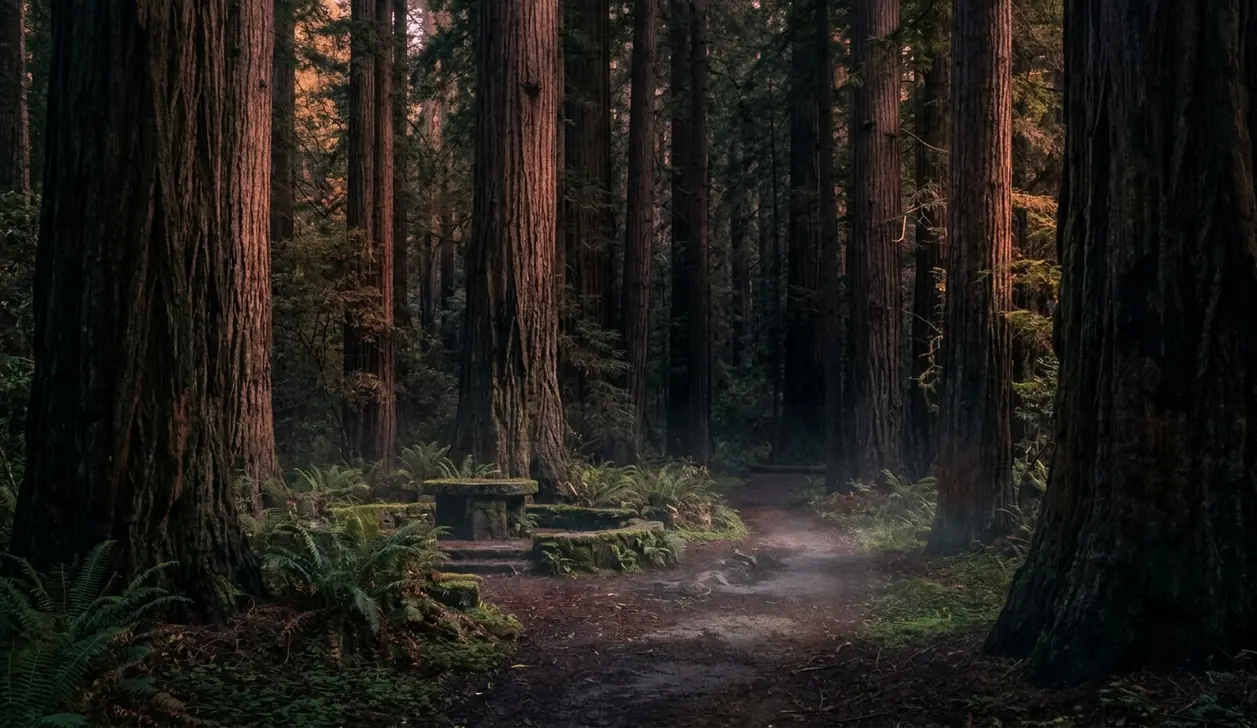
The rural encampment near Monte Rio became the club’s enduring base by the late nineteenth century, roughly 70 miles north of San Francisco. That geography did political work. Redwood terrain absorbs sound. Private roads slow intrusion. Camp lodges create small group loyalty. Guest lists and security separate insiders from everyone else.
That is the first practical lesson of the Grove: secrecy does not require a dungeon. It often requires a pleasant landscape, routine invitations, and a perimeter that turns access into status.
Quick Tip: When studying elite networks, map the venue before interpreting the ceremony. Roads, lodges, guest controls, and meal settings often reveal more than the official motto.
Deconstructing the Cremation of Care
The ceremony begins as theater and should be analyzed that way first. Public descriptions and footage place the Cremation of Care at the opening of the summer encampment. The central scenic object is a large owl shrine, commonly described as about 40 feet tall, positioned near a lake or pond setting. Around it: robed participants, torchlight, amplified narration, music, a mock appeal against worldly burdens, and the burning of an effigy known as Care or Dull Care.
The symbolism is not subtle. The attendee enters a protected space, watches a staged rejection of ordinary anxieties, and sees “Care” destroyed by flame. In plain terms, the ritual tells high-status men that they may suspend their public burdens for the duration of the retreat.
What the ritual can and cannot support
The stronger reading is psychological, not supernatural. The ritual functions as boundary crossing: participants step outside normal civic posture and into a shared private language. They witness something strange together. They know outsiders would find it bizarre. That shared embarrassment can become social glue.
The weaker claim is that the ceremony itself proves literal occult command over governments. The available public evidence supports symbolism, exclusivity, and bonding. It does not, by itself, show that a policy decision gets made at the owl shrine.

Note: This review works from public accounts, visible footage, and official historical records. It cannot reconstruct every private conversation inside the encampment, and it should not pretend that ritual imagery alone establishes a chain of command.
Breaching the Perimeter: A Review of Historical Infiltrations
What do infiltrations actually prove?
Two public breaches still shape the modern imagination of the Grove. Philip Weiss’s 1989 account, published for a national satirical-investigative magazine, gave readers texture: camp hierarchy, elite leisure, drinking, performances, informal access, and the ordinary logistics of a private retreat. Alex Jones’s 2000 hidden-camera operation gave the alternative-media world images: the owl shrine, robed figures, narration, torchlight, and effigy-burning.
Writing versus footage
The Weiss account is valuable because it noticed the social machinery around the spectacle. Who clusters where. How camp culture sorts rank. How leisure softens distance between men who may otherwise meet through lawyers, aides, or institutional protocols.
The Jones footage has a different value. It visually verifies that the ritual staging exists in the form described by critics and attendees. That is not trivial. A camera made the owl, the robes, and the burning effigy available to a mass audience.
But hidden-camera journalism has a built-in ceiling. Fragmented footage can document a scene while missing scheduling, guest context, internal governance, ordinary meals, lectures, bureaucratic routines, and the long stretches of mundane activity that likely occupy much of the encampment. A lens can catch the mask and miss the meeting calendar.
That distinction matters because sensational interpretation thrives in the gap between what the camera shows and what it cannot access. The ceremony is real. The leap from ceremony to total geopolitical control is a separate argument.
Esoteric Bonding as a Mechanism for Geopolitical Leverage
The Grove’s power lies in incubation. Not formal enactment. Not public vote. Incubation.
The club’s motto is commonly rendered as “Weaving Spiders Come Not Here,” a line used to discourage business dealings. On paper, that sounds like a firewall. In practice, off-the-record settings can form the relationships that later travel into official channels. The difference is easy to miss if we look only for signed documents.
How private trust is manufactured
- Exclusivity of invitation: the guest list itself becomes a signal of rank.
- Shared taboo: unusual ritual pageantry creates a memory outsiders cannot fully share.
- Repeated seasonal contact: return visits turn access into familiarity.
- Social cost of betrayal: a closed network punishes disclosure through exclusion, ridicule, or loss of access.
Lakeside talks and camp conversations offer another mechanism. Speakers and listeners are shielded from press questioning, adversarial debate, campaign optics, and ordinary institutional recordkeeping. A military idea can be floated. A political ambition can be tested. A corporate strategy can be sounded out before it appears as a memo, appointment, campaign, merger discussion, or official meeting.
This is where research on hidden history, geopolitics, and deep-state networks often gets sloppy. The existence of a private room does not mean every whisper becomes policy. Yet private rooms do shape which people learn to trust each other before policy becomes visible.
The Enduring Legacy of the Redwood Encampment
The Grove endures because its model is simple. Remove powerful people from public view. Give them ritual, landscape, leisure, and rank-coded intimacy. Tell them business does not belong there while giving them every social condition under which future business, appointments, alliances, and military ideas can be softened into possibility.
For some attendees, the retreat may function as harmless leisure. For others, it offers career access. When wartime scientists, officials, and political figures are present, the same setting can become a venue for consequential informal coordination.
The harder historical endpoint
The strongest real-world-impact example is not the owl ritual. It is the wartime meeting record. The Department of Energy’s OpenNet history places the September 1942 S-1 Executive Committee meeting at Bohemian Grove, connected to atomic-bomb development.
Participants associated with the wartime atomic-energy effort included Ernest Lawrence and senior scientific-military figures involved in decisions about accelerating bomb-related research and production. The timing matters: September 1942 fell just before the Manhattan Engineer District moved under intensified military direction, with major decisions soon following on industrial-scale uranium separation, plutonium production, and centralized bomb-project management.
Strip away the cheap caricature and the picture gets colder. The Grove was not merely a backdrop for strange elite theater; on September 13–14, 1942, it hosted S-1 Executive Committee work tied to the birth of the atomic age.