What Keeps Swiss Police Outside the BIS in Basel?
How can a financial institution operate inside Switzerland while controlling whether Swiss authorities may enter its premises, inspect its archives or enforce a judgment against its assets?
The immediate answer lies in the 1987 Headquarters Agreement between the Swiss Federal Council and the Bank for International Settlements, signed on 10 February 1987. Switzerland agreed to a set of protections that gives the BIS substantial independence within its host country. Those protections separate physical access from judicial jurisdiction and enforcement.
That separation matters at the front door. Inviolability protects premises against compulsory entry, search and seizure. Archival protection reaches the Bank’s documents and records. Jurisdictional immunity governs proceedings against the institution, while immunity from execution concerns measures against its property.
Four questions therefore belong in every investigation: Can authorities enter? Can they obtain the records? Can a court hear the claim? Can a judgment reach the assets?
Calling all four “sovereign immunity” is convenient shorthand. Following each protection separately reveals where legal power actually operates.
Personnel privileges follow their own categories. Senior officials, employees and representatives attending meetings receive protections tied to their status and functions. Tax treatment also follows defined beneficiaries and categories, including qualifying BIS salaries under Swiss taxation. The operative detail is who receives which protection for which activity.
The agreement also provides routes involving consent, waiver and specified exceptions. Anyone pursuing access needs to identify the particular legal barrier before choosing the next step.
How the Reparations Bank Acquired Its Swiss Legal Shield
Start with the German reparations payment that the institution was built to administer. The Hague settlement of 20 January 1930 supplied the international framework for establishing the BIS and its Swiss constituent charter. The Bank began operations on 17 May 1930, with responsibilities that included administering reparations under the Young Plan and promoting cooperation among central banks.
Those two purposes help explain the institution’s continuing importance. A payment-administration role addressed an immediate postwar problem; central-bank cooperation supplied a continuing institutional function.
The legal architecture accumulated through distinct instruments. The constituent charter established foundational protections, the statutes addressed the institution’s organisation and purposes, and the headquarters agreement specified its relationship with Switzerland. Reading them separately keeps the history legible.
By 1987, the headquarters agreement set out protections for the Bank’s premises, archives, activities and personnel. Articles 3 and 4 are central to understanding inviolability and immunity from jurisdiction and execution. Their practical consequence is a series of legal checkpoints between an outside authority and the institution’s working material.
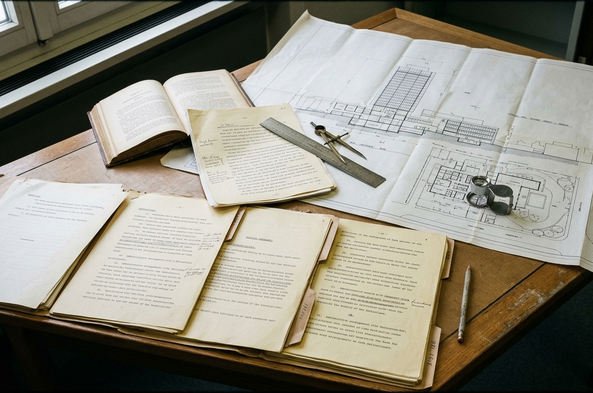
Archives deserve particular attention. Their protection attaches to documents and records belonging to the Bank, including protection extending beyond their storage inside headquarters. Moving a record and gaining lawful access to it are separate matters.
Official communications receive protection too, with provisions covering qualifying couriers and diplomatic bags. The useful investigative approach is precise: identify the communication, establish its official character and examine the applicable protection. A sweeping claim about every electronic transmission would obscure that work.
The historical thread is institutional continuity. The 1930 framework created a protected international banking institution; the 1987 agreement specified the headquarters relationship through which that institution operates in Switzerland.
What Governors Can Coordinate Behind Basel’s Meeting-Room Door
What influence can confidential discussion exert before a central bank announces a public decision?
The BIS’s bimonthly gatherings bring governors into forums with different memberships and purposes. The Economic Consultative Committee, the Global Economy Meeting and the All Governors’ Meeting occupy distinct places in that meeting structure. Treating them as a single command room conceals the institutional chain that an investigation needs to follow.
Governors exchange assessments. Committees develop proposals within their mandates. National authorities make monetary-policy decisions and implement applicable regulatory standards. Each stage offers a different place to examine influence, responsibility and public accountability.
The public descriptions of these meetings supply purposes and participants rather than a verbatim transcript, so an investigation into a particular policy decision needs evidence connecting the discussion to the later decision.
That is the productive question for geopolitics and deep-state scrutiny: how does private coordination shape the choices that national institutions subsequently present to the public? Shared assessments can influence which risks receive attention and which responses officials consider plausible. Establishing a particular chain of influence requires following the decision through the relevant institutions.
Capital Rules Follow a Different Route From Interest Rates
The Basel Committee on Banking Supervision develops prudential banking standards. Its published charter places implementation with member jurisdictions; the committee has no formal supranational authority, and its decisions carry no legal force of their own.
Bank-capital regulation and monetary policy therefore require separate trails. For a capital standard, follow the committee proposal into domestic implementation. For an interest-rate decision, follow the national authority’s decision-making process. Attendance at a Basel meeting establishes participation in discussion.
The headquarters agreement protects the institutional setting for these exchanges. Political influence travels onward through participating authorities, their mandates and their subsequent choices. That is where confidential coordination meets public power.
Following a Records Demand to Centralbahnplatz 2
A demand for BIS records becomes manageable when the investigator separates the document sought from the powers needed to obtain it. The Tower’s address is Centralbahnplatz 2; Aeschenplatz is a separate BIS location. Even the choice of premises needs checking before legal papers move.
Take a prosecutor seeking records concerning a banking transaction. Using the 1987 agreement as the legal baseline, the sequence runs through distinct decisions:
- Define the authority and request. Identify the transaction, records and legal basis for seeking them. A private investigator can request information; a prosecutor or regulator must establish the applicable compulsory power.
- Assess jurisdiction under Article 4. Examine the claim’s subject matter against the agreement’s immunity provisions and specified exceptions, including those concerning certain banking or financial transactions. Classify the proceeding before deciding how it can advance.
- Separate service from entry. Delivering a document raises a different question from entering protected premises. For entry at Centralbahnplatz 2, seek the authorisation required under the agreement. Consent to enter and waiver of jurisdictional immunity require separate consideration.
- Address the archive protection. Identify the requested records as Bank records and examine the protection attaching to them. Establish the applicable route to production before arranging collection.
- Check execution separately. If the proceeding reaches a judgment, examine the rules governing enforcement against the particular assets. Keep that assessment distinct from the earlier question of jurisdiction.
The resulting file contains a defined transaction, a specific records request, an assessed jurisdictional route and a separate request for any necessary access. At the Tower’s threshold, the next action follows the protection actually engaged: obtain the required entry authorisation, resolve access to the identified records, then pursue production through the applicable legal route.