Executive Summary: The Edge of Mainstream Science
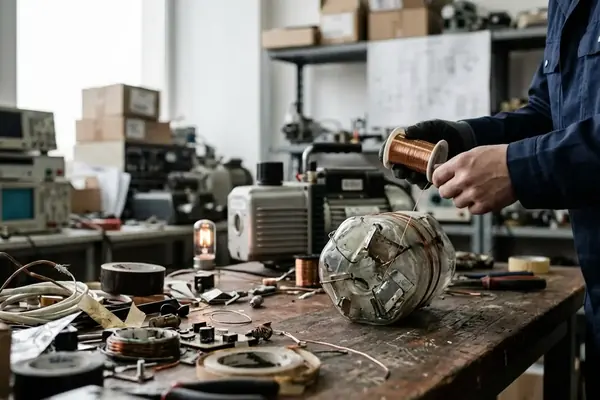
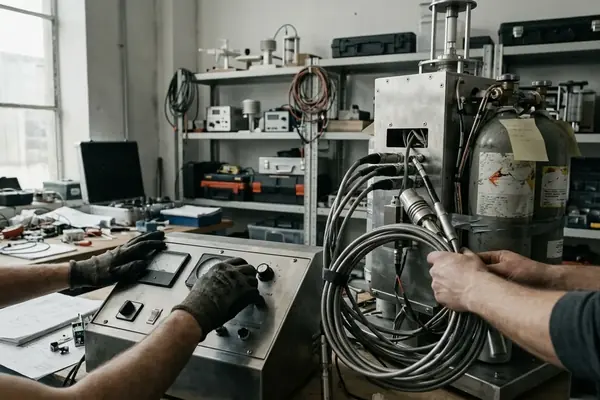
The more useful way to study fringe technologies is not to begin with belief. It is to begin with objects: reactors on benches, antenna arrays in Alaska, cryogenic processors in institutional research facilities, and patient cells altered under clinical supervision.
That approach changes the question. Instead of asking whether a claim sounds strange, this investigation asks whether it left a trace that can be checked: a patent record, a named research facility, a public test, a clinical case, or an operational government program.
Summary:
- Some technologies dismissed as fringe have documented hardware, named researchers, or institutional testing behind them.
- Low-energy nuclear reaction claims, especially Andrea Rossi’s E-Cat, have a public record from around 2011 to 2014, but calorimetry and control conditions remain contested.
- Quantum annealing moved from niche physics into institutional evaluation, according to available records, between 2011 and 2013, without becoming universal quantum computing.
- Weather modification exists in practical forms such as cloud seeding, while claims about ionospheric weapons require a much higher evidentiary threshold.
Three themes run through the cases that follow: alternative energy, advanced computing, and atmospheric intervention. Each sits at a different evidentiary level. CAR-T cell therapy, once radical, moved into regulated clinical use. Optical tractor beams work in microscopic photonics experiments. Magnetic motors still lack sealed, instrumented proof of continuous net power.
That spread matters. Fringe is not one category. It is a borderland.
Criteria for Selection: Defining ‘Fringe’ Innovation
What earns a technology a place in this article?
Not rumor. Not a forum post. Not a video of a spinning wheel with no load measurement. The minimum standard here is a hard anchor: a built device, a named research team, a patent trail, a university or government test setting, or a public operational program.
Low-energy nuclear reactions qualify because the field has technical literature dating back to the 1989 cold-fusion controversy and later nickel-hydrogen claims publicized, according to public reports, from 2011 onward. That does not mean mainstream nuclear physics accepts the claimed heat source. It means the dispute has a technical record.
The E-Cat is a useful dividing line. Reports associated with Giuseppe Levi at the University of Bologna were presented by supporters as independent validation of excess heat from a nickel-hydrogen reactor. Critics answered with specific objections: steam-quality assumptions, electrical input accounting, and insufficient control over the device during testing. That is a real dispute, not an internet myth.
Optical tractor-beam research qualifies for a different reason. Demonstrations using structured light and Bessel-beam configurations appeared in the early 2010s from university and national-research teams. The effect is limited, microscopic, and medium-dependent, but it exists within photonics rather than folklore.
Quick Tip: Treat documentation as the beginning of analysis, not the end of it. A patent can show that an inventor described a mechanism. It cannot show that the mechanism works as claimed.
Suppressed Energy & Physics Anomalies
1. Low-Energy Nuclear Reactions (LENR) and the E-Cat
Andrea Rossi’s E-Cat became one of the most argued-over energy devices of the early 2010s because it made a bold claim in ordinary-looking hardware: nickel and hydrogen, heated inside a reactor body, could produce excess heat beyond conventional chemistry.
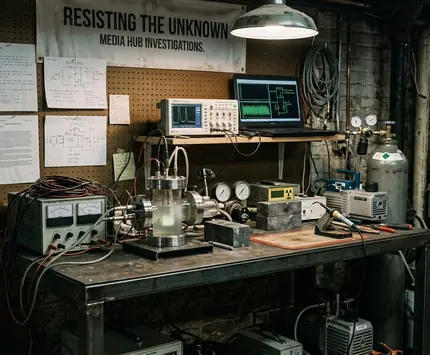
Public technical descriptions varied by test setup, but they referred to alumina or corundum reactor bodies, AISI 310 or AISI 316 stainless-steel components, and resistance heating used to initiate or stabilize the claimed reaction environment. That level of material detail is one reason the E-Cat stayed in circulation longer than most free-energy stories.
Available reporting places E-Cat-related demonstrations and third-party-style reports mostly between 2011 and 2014. Work associated with Giuseppe Levi at the University of Bologna described thermal output measurements, and supporters treated those reports as a breakthrough.
The harder reading is less dramatic. The paper trail establishes a contested excess-heat claim. It does not establish a commercially reliable LENR reactor. Independent calorimetry and reproducibility remain the unresolved center of the case.
2. Magnetic Motors and Zero-Point Energy
Magnetic-motor claims live closer to the inventor’s workshop than the university research setting. George Green-style magnetic motors and David Hamel-style spinners rely on permanent magnets, rotating assemblies, and the promise of self-sustaining dynamic equilibrium without conventional fuel.
The appeal is easy to understand. A motor that holds itself in motion by balancing magnetic forces would rewrite the practical economics of energy. It would also collide with basic conservation rules unless the device drew measurable energy from a source that instruments could identify.
That is where the record thins. Public descriptions circulated mainly from the late twentieth century into the early internet period, but no robust independent replication has established net energy production. A magnetic motor displayed on video or described in patent-style language is not evidence of net energy production unless it runs under sealed, instrumented, independently controlled load testing.
Note: The most revealing test is not whether a rotor spins. It is whether the machine powers an external load continuously while every input path is monitored.
3. Optical Vortex ‘Tractor Beams’
Here the word fringe can mislead. Optical tractor beams are not spacecraft tow cables. They are research effects in structured light.
Research associated with Dr. Tomas Cizmar and collaborators at the University of St Andrews and Singapore research institutions showed that carefully shaped light fields can reverse the usual direction of radiation pressure for microscopic particles under controlled optical conditions. Bessel beams and optical vortices matter because they structure the momentum exchange between light and matter.
Comparisons demonstrate the boundary clearly: this is real photonics, not macroscopic levitation. Readers looking for the technical neighborhood can start with Nature Photonics, where the broader field of structured light and nanoscale optical manipulation is regularly examined.
The implication is modest but important. Some ideas sound like science fiction because popular language arrives before scale discipline. In testing, the effect can be serious without being cinematic.
Classified Geopolitics & Advanced Computing
4. Quantum Computing’s Subatomic Processing
Quantum computing entered public imagination as a machine that would replace binary logic. The early institutional story was narrower.
D-Wave Systems built quantum-classical hybrid machines that used superconducting circuits cooled to millikelvin temperatures. These systems did not replace all conventional computing. They targeted optimization-style problems through quantum annealing, using probable states and energy landscapes rather than standard binary instruction flow alone.
Available records show that early commercial systems entered institutional evaluation when a U.S. aerospace contractor began using them from 2011 and a large search-and-cloud research group followed from 2013. The focus was optimization, sampling, and machine-learning research.
That distinction matters. A quantum annealer can be a real machine and still be far from a universal quantum processor. In fringe-technology debates, this is often where exaggeration enters. A narrow breakthrough becomes a total revolution in the retelling.
5. Ionospheric Manipulation and Weather Modification
Atmospheric technology is a trap for sloppy categories. HAARP, Chinese cloud seeding, and speculative weather-weapon claims involve different mechanisms, scales, and evidence standards; merging them weakens the investigation.

HAARP operated in Gakona, Alaska, as a high-frequency ionospheric research facility with a phased antenna array and transmitter power commonly described at the megawatt scale. Its design purpose was to heat limited regions of the ionosphere for radio-science experiments. Administrative control shifted to a university operator around 2015.
Russian military commentator Col. Plaksin raised allegations involving plasmoids, electron showers, and weaponized atmospheric effects. Those claims belong in the record as geopolitical allegations, not demonstrated operational capability.
Cloud seeding sits on firmer public ground. China’s State Council described plans in 2020 to expand weather-modification capacity by 2025, including cloud-seeding and hail-suppression operations across agricultural and water-management regions. The tools are practical: aircraft, rockets, artillery shells, or ground generators dispersing agents such as silver iodide into suitable cloud systems.
The partial answer is this: states do intervene in weather under specific conditions. That fact does not validate every claim about atmospheric warfare.
Radical Medical Interventions
6. Genetic Reprogramming via Viral Vectors
The clearest case of a once-fringe intervention becoming medicine begins with a child in crisis.
Emma Whitehead received experimental CAR-T therapy in 2012 after relapsed acute lymphoblastic leukemia. At the University of Pennsylvania, Dr. Carl June’s team used disabled HIV-derived lentiviral vectors to reprogram patient T-cells so they expressed a chimeric antigen receptor targeting CD19 on B-cell leukemia cells.
The method sounded alarming to the public ear: use a disabled form of HIV to alter immune cells, then return those cells to the patient. In practice, the viral vector served as a delivery tool. The therapeutic gamble was whether the reprogrammed cells could find and attack the cancer.
They did, but the cost was severe. Whitehead developed cytokine-release syndrome, the immune storm sometimes called “shake and bake” by clinicians and families who watched the fevers and shock-like symptoms unfold. She required intensive-care management.
Clinicians connected the reaction to cytokine signaling and treated the crisis with an interleukin-6 pathway blocker. Remission was reported within the same 2012 treatment period, and the case became a defining marker in CAR-T development.
The broader principle is that clinical validation changes the status of a technology. Early case reports are not enough by themselves. By 2017, after multi-site clinical evidence accumulated, the first CD19-targeted CAR-T therapy for pediatric and young adult acute lymphoblastic leukemia gained regulatory acceptance.
Scope and Limitations of Fringe Science
The central limitation is simple: documentation is not proof.
Institutional involvement can show that a subject was taken seriously enough to test, fund, regulate, or operate. It does not automatically validate claims of suppression, weaponization, or commercial readiness. That caveat is especially important here because the evidence ranges from clinical remission to disputed heat measurements to inventor-led energy devices.
LENR still faces unresolved reproducibility and mechanism problems. Heat anomalies have been reported across decades, but no broadly accepted reaction pathway or repeatable engineering platform has moved the field into mainstream power generation.
Magnetic-motor and zero-point-energy devices face an even steeper barrier. They have not produced a publicly verified, independently replicated system that delivers continuous net power under sealed, instrumented conditions.
Space-based solar power shows another boundary: funding. NASA and related U.S. agency studies ran in concentrated bursts, including a mid-1990s fresh-look phase and a 1999 to 2001 exploratory technology phase. Sustained deployment funding did not follow at that time. A concept can be technically serious and still remain outside mainstream buildout because institutions decline to carry it forward.
Optical tractor beams offer the opposite lesson. They are real in experimental photonics, but the demonstrated effects are microscopic and medium-dependent. They do not support claims of spacecraft-style towing.
The Future of Suppressed Innovation
Fringe status changes when measurement improves, when institutions accept risk, and when a claim survives hostile testing.
CAR-T therapy shows the strongest path: a radical intervention in the early 2010s, patient-level evidence, multi-site clinical data, and regulated use by 2017. Quantum annealing shows a partial transition, moving from niche hardware into institutional experimentation between 2011 and 2013 while remaining narrower than popular accounts suggest.
LENR and magnetic motors remain outside mainstream deployment for a more practical reason. The public record has not produced repeatable, independently controlled power-generation systems.
The responsible posture is neither automatic belief nor automatic dismissal. Deep-state geopolitics, classified research, and scientific funding politics all shape what the public sees. But disciplined skepticism still asks the same field questions every time: What was built? Who tested it? Under what controls? What survived replication?
That is where suppressed innovation, if it exists, eventually has to surface.